Home / Ōshū Kaidō / Sattejuku
Sattejuku 幸手宿
| Ōshū Kaidō (奥州街道) | Station 6 of 27 · Nihonbashi (Edo) → Shirakawa |
|---|---|
| Nikkō Kaidō (日光街道) | Station 6 of 21 · Nihonbashi (Edo) → Nikkō |
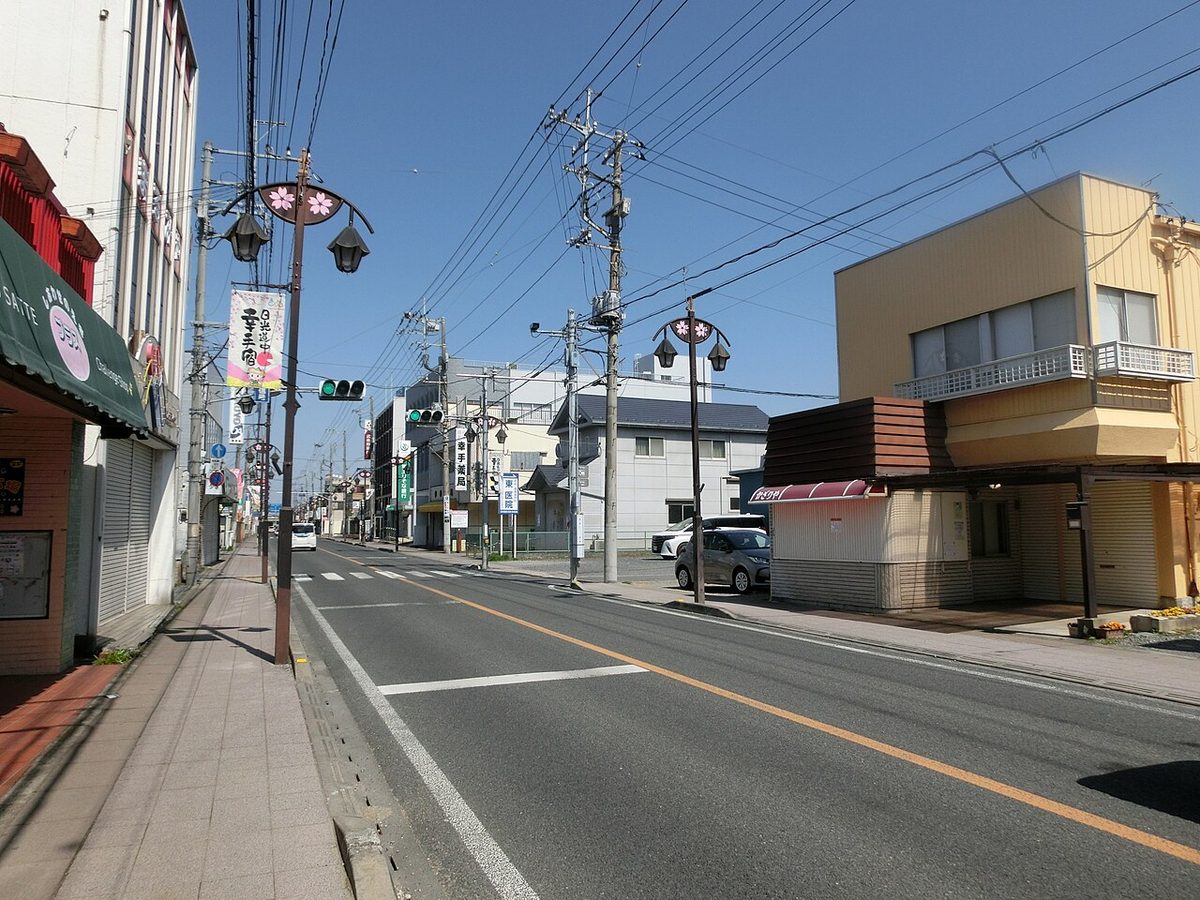
| Present-day location | Satte, Saitama, Japan |
| Prefecture | Saitama (Kanto region) |
| Next station | Kurihashijuku |
| Coordinates | 36.14244° N, 139.7026° E |
Satte-juku was a post station established in the Edo period: the sixth station on the Nikkō Kaidō and Ōshū Kaidō counting from Nihonbashi in Edo, and the sixth station on the Nikkō Onarimichi. It belonged to Katsushika District — or Sarushima District — of Shimōsa Province (from the Manji years onward, after a transfer of jurisdiction, to Katsushika District, Musashi Province). It corresponds to present-day Satte City, Saitama Prefecture. It was one of the six Saitama stations (Saitama rokushuku).
Overview
Satte-juku was the sixth post station on the Nikkō Kaidō and Ōshū Kaidō counting from Nihonbashi in Edo; because the Nikkō Kaidō and the Nikkō Onarimichi join there, it was also the sixth station on the Nikkō Onarimichi. Satte-juku stood on a plain on the right bank of the Furu-Tone River, in Katsushika District, Shimōsa Province; following the Tone River improvement works it came to belong to Katsushika District, Musashi Province. Border changes were carried out, and from the Manji years (1658–1661) it belonged to Tamiya-no-shō in Sakurai-gō, Musashi Province, and from the Genroku years (1688–1704) it was called Satte-juku. The station comprised the four towns of Umanosuke-chō, Kuki-chō, Nakamachi and Arajuku, plus the branch village of Ushimura. In the year 1616, relay transport of men and horses began, 25 men and 25 horses were constant, 10,845 lire land, and 845 homes, including the aid of the people. According to the Inquisitor's Book, there were 27 vacationers and 27 deputies, and one high price spot. According to Toiyaba's Business Book, it was a day shift in the city of Kuyumi, Kumichi, Kyun-sama and right-hand Kabuki. The population was 3,977 and the number of houses was 962. In the year 11 of the holiday, the apprentice became 11,845 stones. However, because of the effects of water damage and so on, I received a leave of absence from the village. At the end of the day, with the increase in traffic, eight persons from all over the sun's roads volunteered to help. In Sasuke, our host, the resting-place of the Sun, was set up in the sacred temple precinct. In addition, in the year 1861 of the Fukumiya period, aid has been ordered on the move, and they offer humane and other forms of dress and grooming. Also, around Sakejuka, there was the important city of Sakesai, around which Nakkaka's city met Kadani and Sundo Road, the state capital of the state of the river, which is a shipping and commercial facility.
History
It was the location where the happy hands had been. In the past, when Japan's respect for the Japanese army was in the East, it landed on the island at the time of the legend that this area was sea, and there was an ancient document saying that the agricultural god had been cast over to the fourth of the lightning shrines. In Kamakura's time, this land was covered by a dirt hill across the natural wall between the old Tohoku River and the old Tohoku River. During that time, the founder was a military and intercontinental issue. Since the time of the room town, it has become the territory of Mr. Akimi, and a caravan has been built near the shrine.
Establishment of Satte-juku
Satte-juku was located along the old highway through what is now the central to northern part of Satte City, Saitama Prefecture, extending over roughly 900 metres from north to south. It was the sixth post station on the Nikkō Kaidō and Ōshū Kaidō counting from Nihonbashi in Edo, and the distance from Edo (Nihonbashi) to Satte-juku was 12 ri. Because the Nikkō Kaidō and the Nikkō Onarimichi join in front of Satte-juku (the former Kami-Takano Village), it was also the sixth station on the Nikkō Onarimichi. In the Edo period the Satte area became a directly held territory of the Edo shogunate. Satte-juku was a post town at the junction of the Nikkō and Ōshū highways with the Nikkō Onarimichi, and the point where the Tsukuba road branched off.
Change of name and location
A change of border was made in connection with the remodeling of Tokugawa. According to the country's county name in this area, it will be listed as the lower state of Salushima or Fukuoka prefecture until October 11 or so. After that, most of the area, except for the left bank of the river, was replaced by the lower states. In the year 1658 - 1660, he came to belong to the Shikoku Miyagi Miyagi, who is a member of the Shikokugi Miyagi. He came to be called Tamiya, or Tamiya and Sakushi. Then it came to be called Sattejuku from the original year of 1688-1704.
Sunlight's arrival and hello
In Sattejuku, our lord, who is a resting place and lodging by Sun's Comen, was set up in the Sacred War. Your Highness was not rebuilt after the fire was burned, but a room in the main building of the sacred temple was used instead. The main route to the sun's comet was to go north up the Sun's highway into Nikkō Kaidō and into the sun. According to Tokugawa's Fukuoka, the vacation for the Shogun's house was in the 14th year of Manugawa's stay in Japan.
The Uchikowashi Riot at Satte-juku
According to Sattejuku
Kazunomiya's Descent to Edo
In the year 1861) the subsidy was ordered on the occasion of the return, and the Okagawa-su of Nakasendu offers the Okaga-shuk of Nakasendu, for example.
Innuendo station
Satte was under the direct control of the Edo from the near future, and his residence was in four towns and a cowhouse. According to the Inquisitor's Book, there were 27 vacationers and 27 deputies, and one high price spot. According to Toiyaba's Business Book, it was a day shift in the city of Kuyumi, Kumichi, Kyun-sama and right-hand Kabuki. The population was 3,977 and the number of houses was 962.
It's a prosthesis
According to the Shinpen Musashi Fudoki-kō, relay transport of men and horses (tenma) began on the Nikkō Kaidō in 1616 (Genna 2), with a fixed complement of 25 men and 25 horses. Satte-juku is said to have had 10,000 tsubo of tax-exempt land (jishi menkyo), corvée (sukegō) obligations assessed at 11,845 koku, and 845 houses. From the beginning of the early modern period it was a directly held shogunate territory; the station comprised the four towns of Umanosuke-chō, Kuki-chō, Nakamachi and Arajuku, plus the branch village of Ushimura. According to the Shukuson Taigaichō of 1843 (Tenpō 14), there was one honjin (in Kuki-chō) and no waki-honjin, 27 hatago inns, and one relay office (toiya-ba, in Kuki-chō). Duty at the relay office rotated daily among Kuki-chō, Nakamachi, Arajuku and Umanosuke-chō, according to the "Toiya-ba Tsutome-muki Kakiage-chō". The station's assessed produce was 2,095 koku 6 shō; its population at the time was 3,937, with 962 houses. There was one kōsatsuba (official notice board).
Relay transport began in 1616 (Genna 2). Satte-juku became a post town at the junction of the Nikkō and Ōshū highways with the Nikkō Onarimichi, and the point where the Tsukuba road branched off. Besides Sugito-juku and Kurihashi-juku on the Nikkō highway and Iwatsuki-juku on the Nikkō Onarimichi, relays also arrived from Washinomiya-chō, Kuki-chō and the Sekiyado Domain in Shimōsa Province, among others.
In 1651 (Keian 4) a fire at Satte-juku (Satte station) burned two-thirds of the station buildings, and in 1674 (Enpō 2) the station received a loan of relay funds (denma-juku haishaku-kin) from the highway magistrate (dōchū bugyō).
In 1711 (Shōtoku 1), the packhorse charges and porter wages out of Satte-juku were fixed, and in 1838 (Tenpō 9) they were raised by one and a half parts in ten, for a term of ten years.
He's here
In the year 11, Sattejuku turned out to be 11,845 stones. But in the year 1742, Fukuokamura, Nagamura, to prevent the water from going into the country, the other half went to work, the other half went to work, the other half went to the expense of Takanomura, and the five villages up to the beginning of the year, as well as the high rainfall (1780 years), were unable to help, and the rest of the rest was a seven-year rest. At the end of the season, there is an appointment for a settlement, and in the year 21 C.E., with reduced admissions and increased traffic on the part of his wife and children, Sattejuku has been designated as a subjugation by Sattejuku. In Lioji's 2 years, the shift order returned and was appointed to help with the increase in traffic traffic.
On the banks of the Seychelles River
On the banks of the river, set up on the banks of the Palace of Palace, which is 30 cities north of São Paulo, "I was carrying out the function of the distribution of goods and the ports of the annual United States of America." The Edo period's early period, the Tohoku River's center, the Tohoku River, and the Edo River were organized. With the growth of U.S. production due to the development of Shinda, the ship's sail between these rivers and Edo developed.
Sixai City
According to the New Japan Post, the Juneai City was held every month on 27 days. It is said to be "an important post town, combined with Nikkō Kaidō and Sun's Security, and an important distribution of goods in the east of the Sasai province."
Sunlight's great eruption of Satama Mountain
In the third year of Akira Mountain eruption (1783 C.E.), the village headman (nanushi) Chiku Bunzaemon carried out rice-gruel relief for seventy days in response to the ash fall from the great eruption. The hereditary headman (nanushi) and relay-office families of Satte-juku include the Nakamura Heizaemon family, descendants of Umanosuke, the developer of Umanosuke-chō, and the Chiku Bunzaemon family, descendants of Tatewaki, the developer of Kuki-chō. It is said that Chiku Bunzaemon was permitted by the deputy (daikan) in 1794 (Kansei 6) to bear a surname and wear a sword (myōji-taitō), because at the time of the Tenmei-era eruption of Mount Asama and the famine, the peasant migration (to Tsuga District, Shimotsuke Province) and the floods, he contributed large sums of money and grain and devoted himself to relieving the destitute.
(The Great Famine of Heaven in Sattejuku)
Because of the droughts that struck Japan in 4 and 7 years, and the rising prices that followed, the Sattejuku had been hit. The old document "Sattejuku" was presented by the "Minday of the Sun." According to the Sattejuku Prizer for the Sattejuku, the weather in June of the year 4 and the heavy rain in August forced the life of the tenants from the high levels of rice and rice fields, and in September the raids were announced, and the front of the Fukuji Gate was stepped up. The farmer discussed the matter and suggested that each of the kiosk-dugs sell the rice for cheap, but they didn't agree and broke up without a decision. The farmer's representative consulted the Old Guard, but the rise in the price of rice has been negative to the counter. The officials, the contractors were trying to stop me from breaking out. Five hundred men and five hundred men were killed in the Fukuoka precinct. The neighboring Sattejuku 19) The decision to the party's party was issued, according to the Bill of Order, "The Court of the Instruments of the Instruments of the Instruments" and "The Court's decision to take part in the creation and reassembled the 27th day." And Sattejuku and upper school officials say that because of the responsibility of failing to control me, the great lord received "rebuking" for years or longer. "The result of the explosion at Sattejuku, Sattejuku and neighboring post town, the sale of rice and charity and the survival of the needy."
The Edo earthquake
On October 2nd, 2nd, 2nd, and November 11, 1855. In Sujuku there was damage caused by an Edo earthquake on October 2nd of 2nd. The frequency of the quake is: "The middle of V and VI, and closer to VI." - In this earthquake, there is more than a quake along the river. According to the report in the New York Times, there were records of the damage to the village's peaceful Edo earthquake in the Sajukka area, Sukiujuu's homes, several 1,089 houses, 2 homes, 1027 homes, as well as the ten27 residences, and the town was injured, according to the "Accent of the Great Earthquake Resident, " and the town was injured by a man who was injured by 189, a house destroyed by 108 houses, a house destroyed by a house destroyed by an earthquake, a house destroyed by a house destroyed by an earthquake, a house destroyed by an earthquake, a house destroyed by an earthquake, a house destroyed by an earthquake, a house destroyed by an earthquake, a house destroyed by an earthquake, a house destroyed by an earthquake, a house destroyed by an earthquake, a house destroyed by a house destroyed by a man, a house destroyed by a house, a house, a house, a house destroyed by a house destroyed by a house, a house destroyed by a house by a house, a house, a house, a house, a house, a house destroyed by a house, a house, a house, a house, a house
Like a place, an old trail, a connection road
Road The sun fertilizes. Iseshima. The sun's path. The next room. I don't know what you're thinking. The sun fertilizes. (Integrated in capital letters, etc.)
An old document
NLJP: 763980/42. Satte, Satte's Record, and Kyoto University's Ancient Document Room. "The first two months of the year, the second month of the year, the second month of the earthquake, and the second year of the earthquake, and the second year of the earthquake, and the second year of the earthquake, In the 14th year of Fukuoka, Japan, the Book of the Diagnostics. "Edo Five Roads Reservation." Satte's document. Nakamura family documents. Nomura family document. Nakamura family documents.
A Japanese book
Hasegawa. Sakura Sakura: "The earthquake disaster and the terrain of the earth. " I'm going to show you how to do that. I'm going to do that. I'm going to show you how to do it. I'm going to do it. Shikichi Shikoku's regional view of the Sequoia of 60 states in the case of the National Arts of Japan. In the case of Sunlight, "Sun," "Sun's No. 15" and "Sun's University," 1979, pp. 53-67. Nakamura-sama Matsumoto-samaji, "victim in the capital of the Edo earthquake." "History Earthquakes." 19th, Historical Earthquake Research Institute, 2003, 32-37. The first edition, published in 1993, pages 1100-11. I'm going to show you how to do this.
Text adapted from the Japanese Wikipedia article 幸手宿, whose full text was translated into English for this guide by its contributors, licensed CC BY-SA 4.0. Station facts cross-checked with the road station lists (Japanese Wikipedia, CC BY-SA 4.0) and Wikidata (CC0).