Ōiso-juku 大磯宿
| Tōkaidō (東海道) | Station 8 of 53 · Nihonbashi (Edo) → Kyoto |
|---|---|
| Present-day location | Ōiso-machi, Kanagawa, Japan |
| Prefecture | Kanagawa (Kanto region) |
| Distance from Nihonbashi | About 65.8 km (by the historical station tables) |
| Next station | Odawara-juku — about 15.7 km on |
| Coordinates | 35.309° N, 139.31531° E |
Ōiso-juku (大磯宿, Ōiso-juku) was the eighth of the fifty-three stations (shukuba) of the Tōkaidō. It is located in the present-day town of Ōiso, located in Naka District, Kanagawa Prefecture, Japan.
History
Ōiso-juku was established in 1601, along with the other original post stations along the Tōkaidō, by Tokugawa Ieyasu. In 1604, Ieyasu planted a 3.9 km (2.4 mi) colonnade of pine and hackberry trees, to provide shade for the travelers.
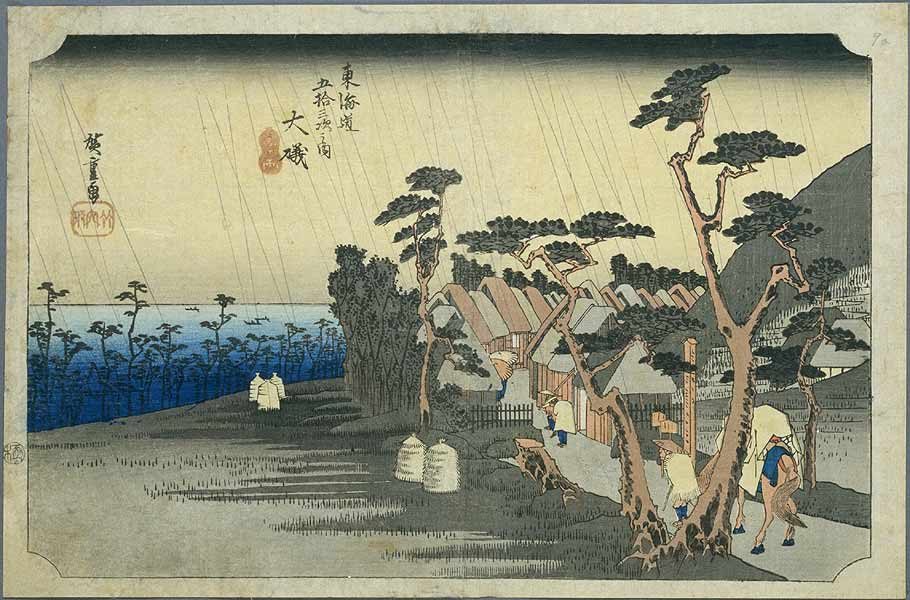
The classic ukiyo-e print by Andō Hiroshige (Hōeidō edition) from 1831–1834 depicts travelers in straw raincoats entering a village by the ocean during pouring rain. One is mounted, and the other is on foot. The road is lined with pine trees. By contrast, the Kyōka edition of the late 1830s depicts a prosperous village overlooking a wide expanse of Sagami Bay with the mountains of the Izu Peninsula on the far shore.
Neighboring post towns
- Tōkaidō
- Hiratsuka-juku - Ōiso-juku - Odawara-juku
Text adapted from the English Wikipedia article Ōiso-juku by its contributors, licensed CC BY-SA 4.0. Station facts cross-checked with the road station lists (Japanese Wikipedia, CC BY-SA 4.0) and Wikidata (CC0).