Narumi-juku 鳴海宿
| Tōkaidō (東海道) | Station 40 of 53 · Nihonbashi (Edo) → Kyoto |
|---|---|
| Present-day location | Midori-ku, Aichi, Japan |
| Prefecture | Aichi (Chubu region) |
| Distance from Nihonbashi | About 343 km (by the historical station tables) |
| Next station | Miya-juku — about 6.5 km on |
| Coordinates | 35.0805° N, 136.94976° E |
Narumi-juku (鳴海宿, Narumi-juku) was the fortieth of the fifty-three stations of the Tōkaidō. It is located in former Owari Province in what is now part of the Midori-ku section of the city of Nagoya, in Aichi Prefecture, Japan.
History
Narumi-juku had a population of 3,643 people at its peak. The post station also had 847 buildings, including one honjin, two wakihonjin and 68 hatago.
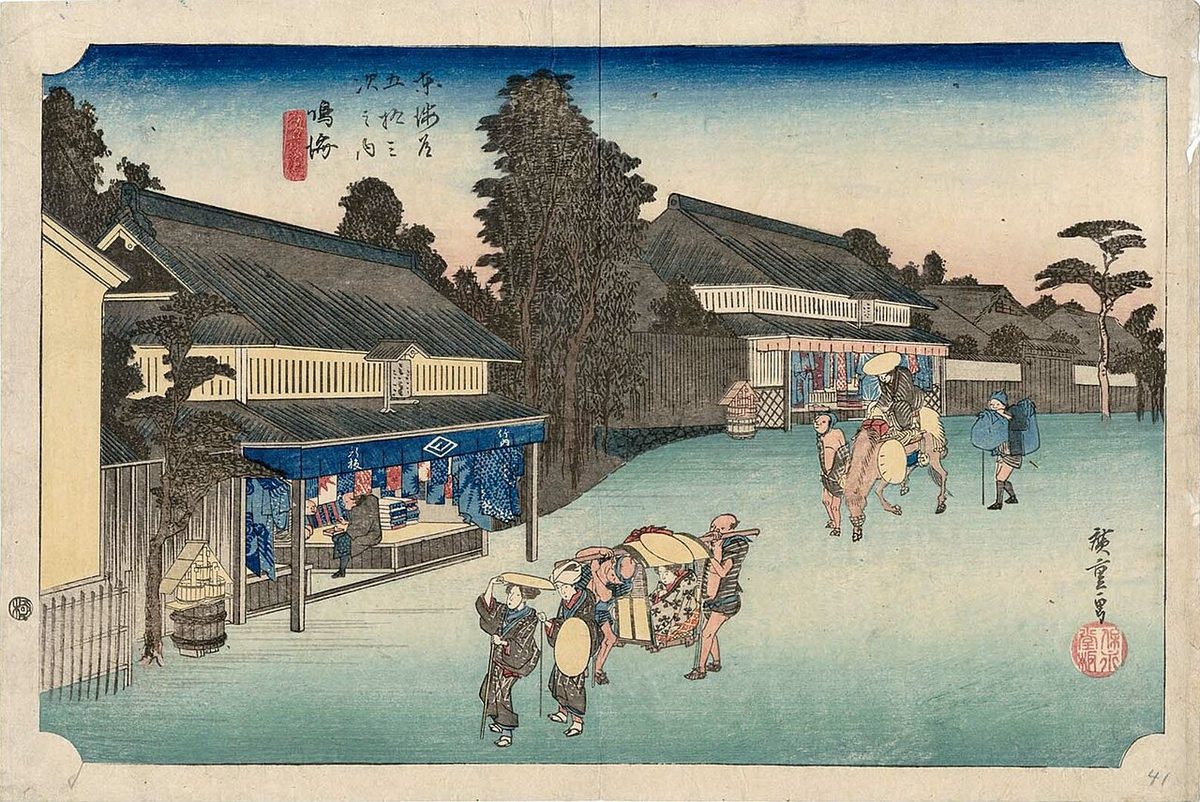
The classic ukiyo-e print by Andō Hiroshige (Hōeidō edition) from 1831 to 1834 depicts travellers passing by open-fronted shops selling tie-died cloth, typically used for making yukata summer kimono, which was a local speciality of the region. The railroad bypassed Narumi-juku in the Meiji period, and a portion of the old town is preserved as a tourist attraction.
Neighboring post towns
- Tōkaidō
- Chiryū-juku - Narumi-juku - Miya-juku
Text adapted from the English Wikipedia article Narumi-juku by its contributors, licensed CC BY-SA 4.0. Station facts cross-checked with the road station lists (Japanese Wikipedia, CC BY-SA 4.0) and Wikidata (CC0).